
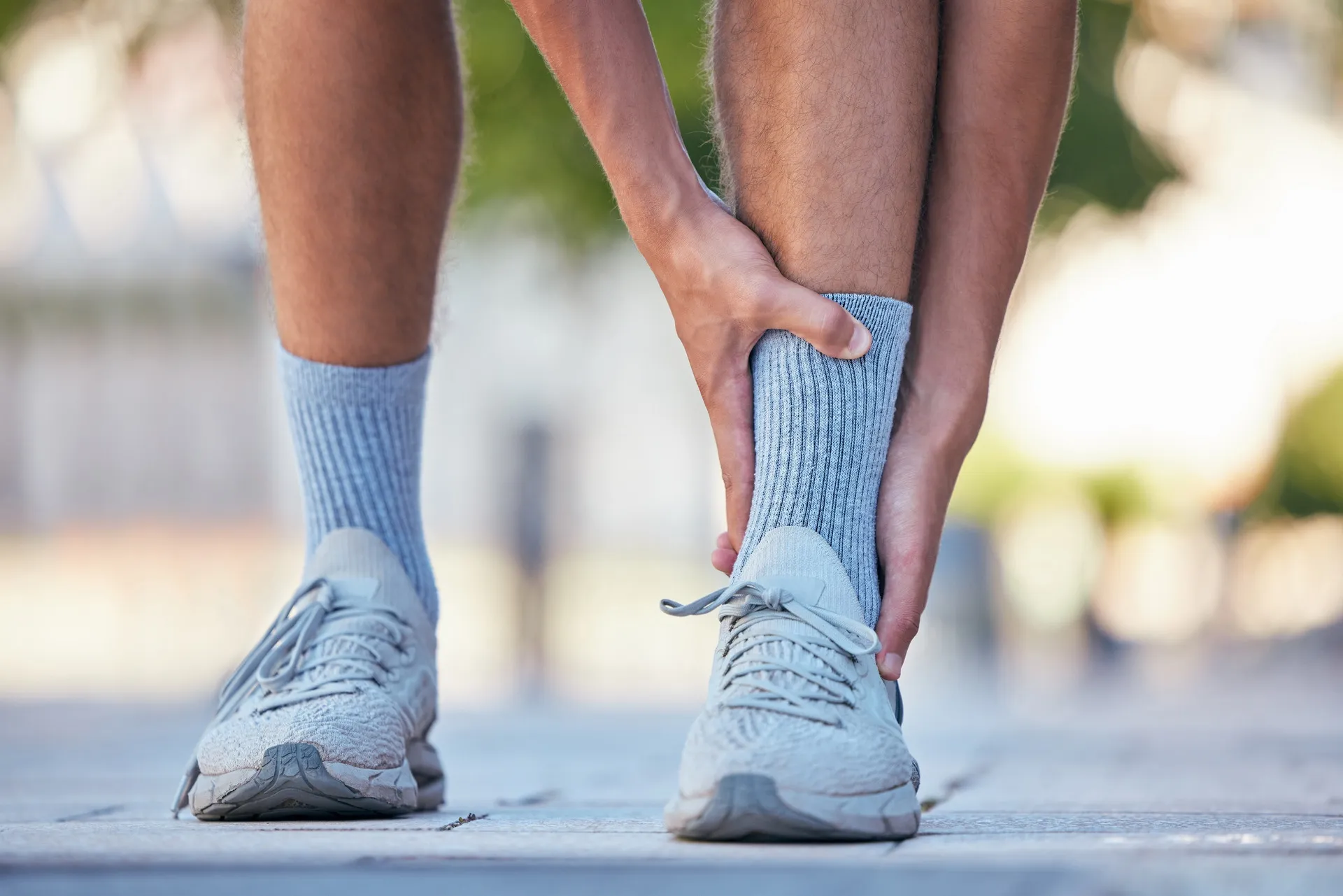
Shin splints cause pain along the front or inner edge of the shin, usually during or after running, while Achilles pain is felt at the back of the ankle, above the heel. Both are typically overuse injuries that build up gradually, most often from a sudden increase in training, rather than from a single specific incident.
If you’ve noticed pain creeping in the more you run, telling the two apart is the first step to treating the right one properly.
Shin splints
Pain along the shin — usually the inner edge, sometimes the front, that often starts as a dull ache during activity and can become sharper or more constant if training continues without change. It’s commonly linked to a sudden increase in running distance, frequency, or intensity, especially after a quieter period.
Typical pattern: worse during and after running, easing with rest, gradually returning if the same training load continues unchanged.
Achilles pain
Pain and sometimes stiffness at the back of the ankle, just above the heel, where the Achilles tendon sits. It can feel worse first thing in the morning or after rest, and may ease slightly once warmed up, only to return afterwards. Left unmanaged, it can develop into a more persistent, longer-term issue.
Typical pattern: morning stiffness, discomfort at the start of activity, sometimes easingmid-run before returning afterwards
Why both tend to appear in summer
Both are classic “too much, too soon” injuries, common when training ramps up quickly after a quieter winter, or when mileage increases faster than the body’s had time to adapt to.
Why pushing through rarely works
Both conditions tend to respond poorly to “running through it.” Continuing to train on the same load that caused the problem usually keeps it simmering rather than letting it settle, and Achilles issues in particular can become considerably more stubborn if left too long.
What treatment involves
Assessment first — confirming which one it actually is, and how much load is realistically appropriate right now. From there, treatment usually combines short-term pain management with a structured, gradual return to running, since the goal isn’t just easing the pain but making sure it doesn’t return the moment you’re back to full training.
Book your assessment in Mold
If shin or Achilles pain is creeping in the more you run, our team can help you get to the bottom of it and back to training properly. Book your assessment with our Physiotherapy or Sports Therapy team in Mold — let us know if you have a preferred therapist. Book now.