

Many patients come to us unsure whether Pilates is safe for their back, or worried they’ll aggravate an old injury without realising. Others have tried a class before but were never quite sure they were doing the movements correctly, or felt self-conscious being the least flexible person in the room.
Our classes are built with exactly this in mind. Because they’re led by within a clinical setting, every exercise is checked and adapted around your body, your injuries, and your ability, so you can build strength and control with confidence, in a friendly group where nobody’s watching to see how flexible you are.
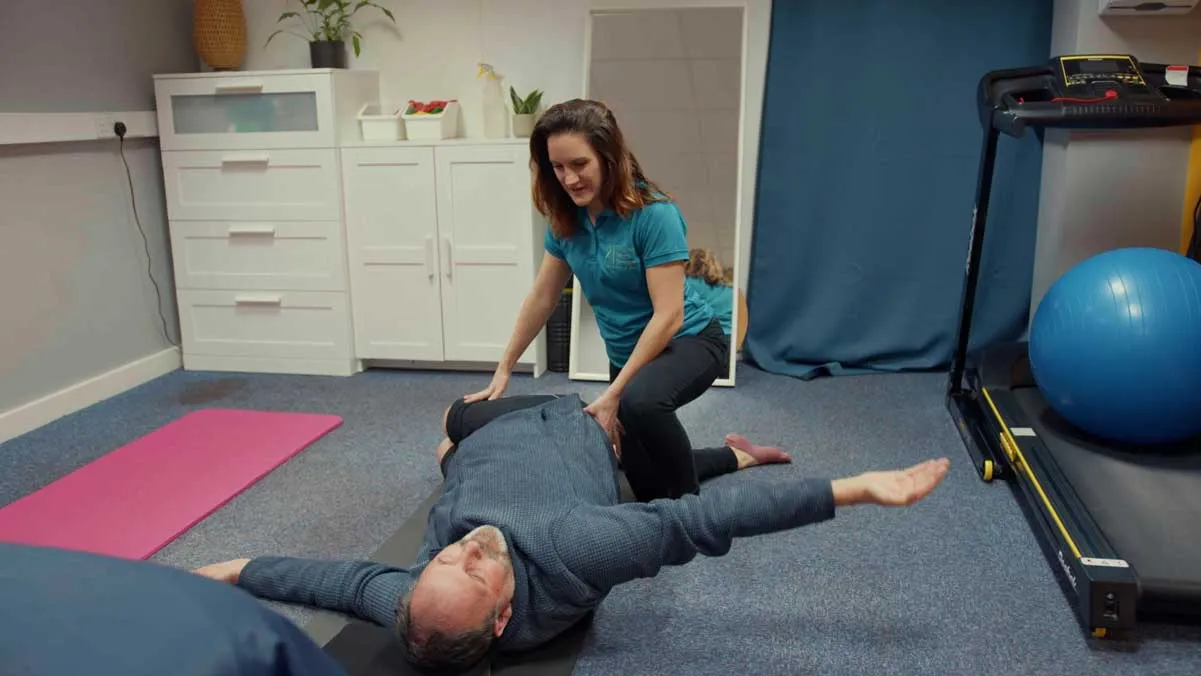
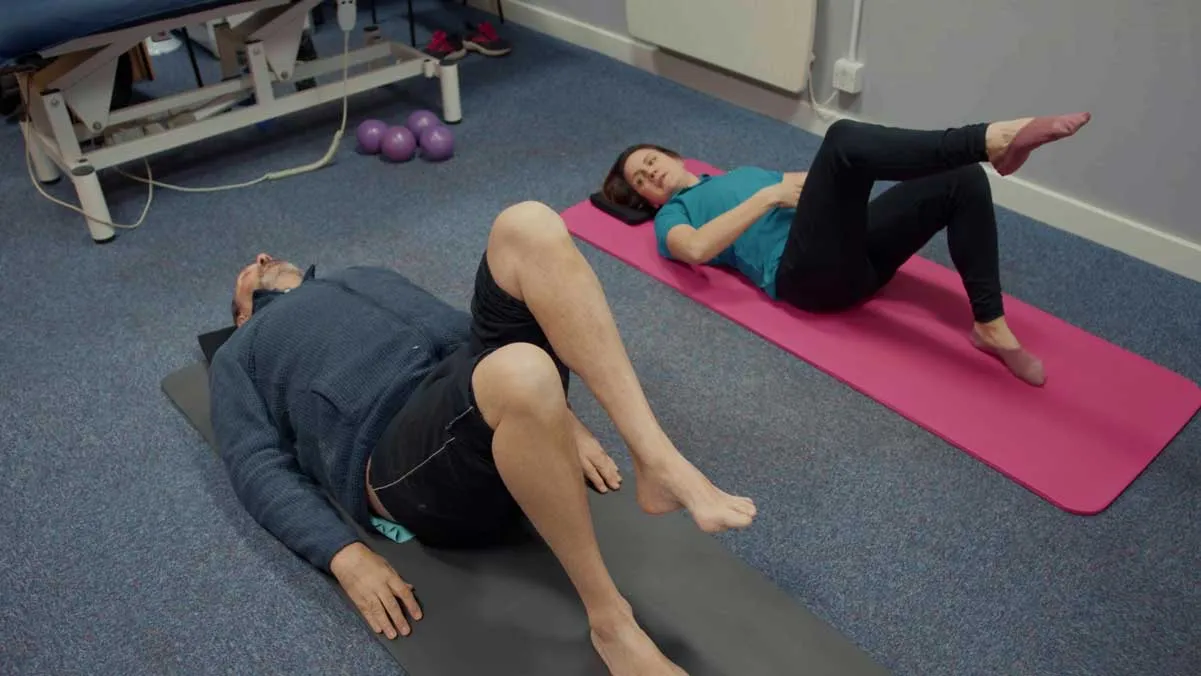
small equipment (bands, balls, rings) rather than reformer machines, accessible and easy to adapt session to session.
most sessions welcome all levels together, everyone working at their own pace. We also run beginner courses from time to time for anyone who'd rather start out alongside others at the same stage. See our Workshops & Short Courses page for upcoming dates.
correct form and technique checked throughout, with any inappropriate movement adapted or avoided.
up to 10 people, for proper attention and a sociable atmosphere every session.
Our studio is upstairs, so you’ll need to be able to manage a flight of stairs and have a general level of mobility to take part.
If you’re managing back pain and sciatica or neck pain and headaches, our Physiotherapy team can also assess and treat these directly, alongside or before joining a class. If you haven’t been assessed with us before and you’re currently carrying an injury, we’d recommend booking that assessment first.
We and our partners, including Google, use cookies and personal data to analyse traffic and for ads personalisation and measurement. You can accept, reject or choose which cookies to allow. Privacy Policy • Cookie Policy • Terms & Conditions • Google Privacy
We use cookies to help you navigate efficiently and perform certain functions. You can choose which categories to allow below. Cookies categorised as Necessary are always active.
We also use third-party cookies for analytics and advertising. These are only stored with your consent. You can update or withdraw consent at any time via the cookie icon at the bottom-left. This site operates under UK GDPR, the Data Protection Act 2018, and the Privacy and Electronic Communications Regulations (PECR). Cookie Policy • Privacy Policy
Necessary cookies are required for core site features including security, network management, and consent storage.
| Cookie | Duration | Description |
|---|---|---|
hmdg_cookie_consent | 180 days | Stores your cookie consent preferences. |
PHPSESSID | Session | WordPress session identifier. |
wordpress_logged_in_* | Session | WordPress login authentication. |
Functional cookies enable enhanced features such as live chat and remembering preferences.
| Cookie | Duration | Description |
|---|---|---|
wp-settings-* | 1 year | Stores user interface preferences. |
Analytics cookies help us understand visitor behaviour. Controls analytics_storage for Google Analytics 4.
| Cookie | Duration | Description |
|---|---|---|
_ga | 2 years | Google Analytics — distinguishes users. |
_ga_* | 2 years | Google Analytics 4 — session persistence. |
_gid | 24 hours | Google Analytics — distinguishes users. |
_gat | 1 minute | Google Analytics — throttles request rate. |
Performance cookies collect aggregate, anonymous data about site performance.
| Cookie | Duration | Description |
|---|---|---|
_gat_gtag_* | 1 minute | Google Tag Manager — rate throttle. |
Marketing cookies track visits to deliver relevant ads. Controls ad_storage, ad_user_data, and ad_personalization.
| Cookie | Duration | Description |
|---|---|---|
_gcl_au | 90 days | Google Ads — conversion tracking. |
_gcl_aw | 90 days | Google Ads — click attribution. |
_gac_* | 90 days | Google Ads — campaign information. |
IDE | 1 year | Google DoubleClick — ad targeting. |
Powered by HMDG • Cookie Policy