
If you have been carrying stubborn muscle tension, tightness through the back or shoulders, or a niggle that keeps returning after training, cupping therapy may help you feel looser and move more freely.
At Peacock Pain & Injury Clinic in Mold, we offer myofascial cupping as part of our clinical treatment toolkit, delivered by experienced therapists who understand how and when to use it effectively.

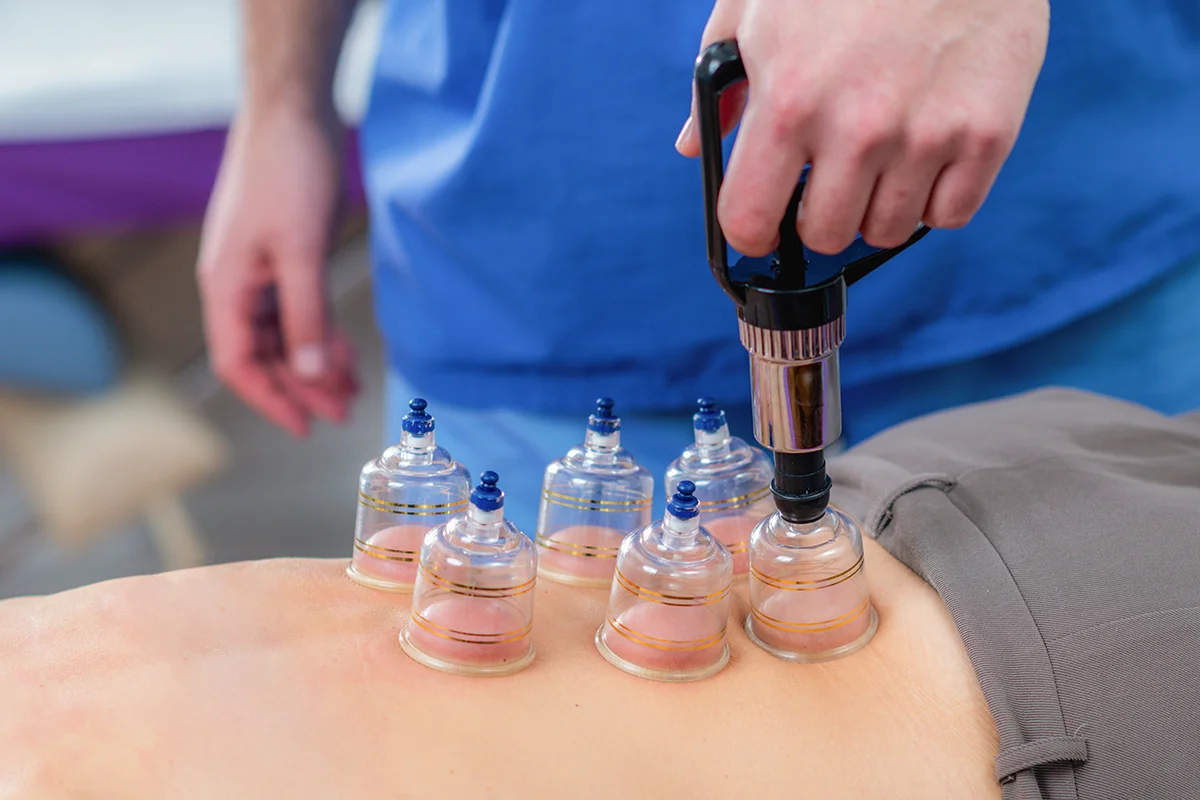
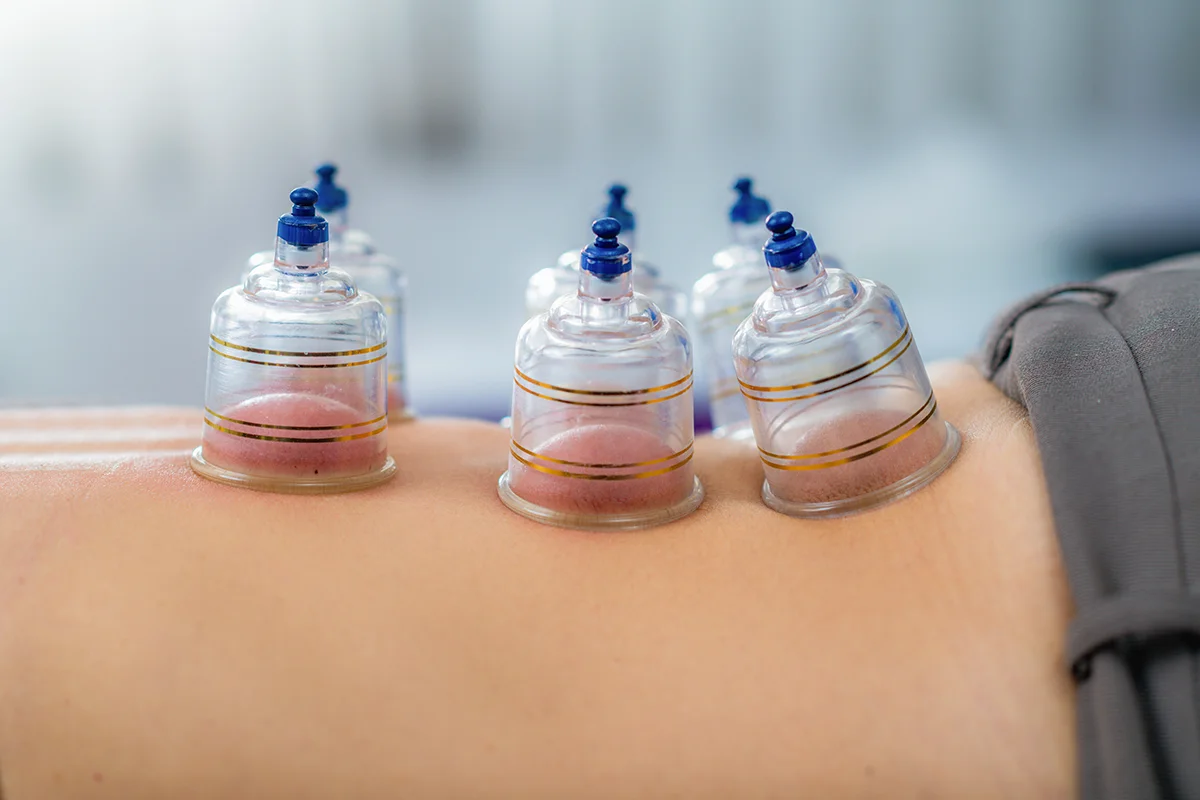
Cupping therapy is a hands on treatment where cups are placed on the skin and a vacuum is created inside them with a manual hand pump. The suction gently lifts the skin, the underlying fascia, and the superficial muscle layers upward.
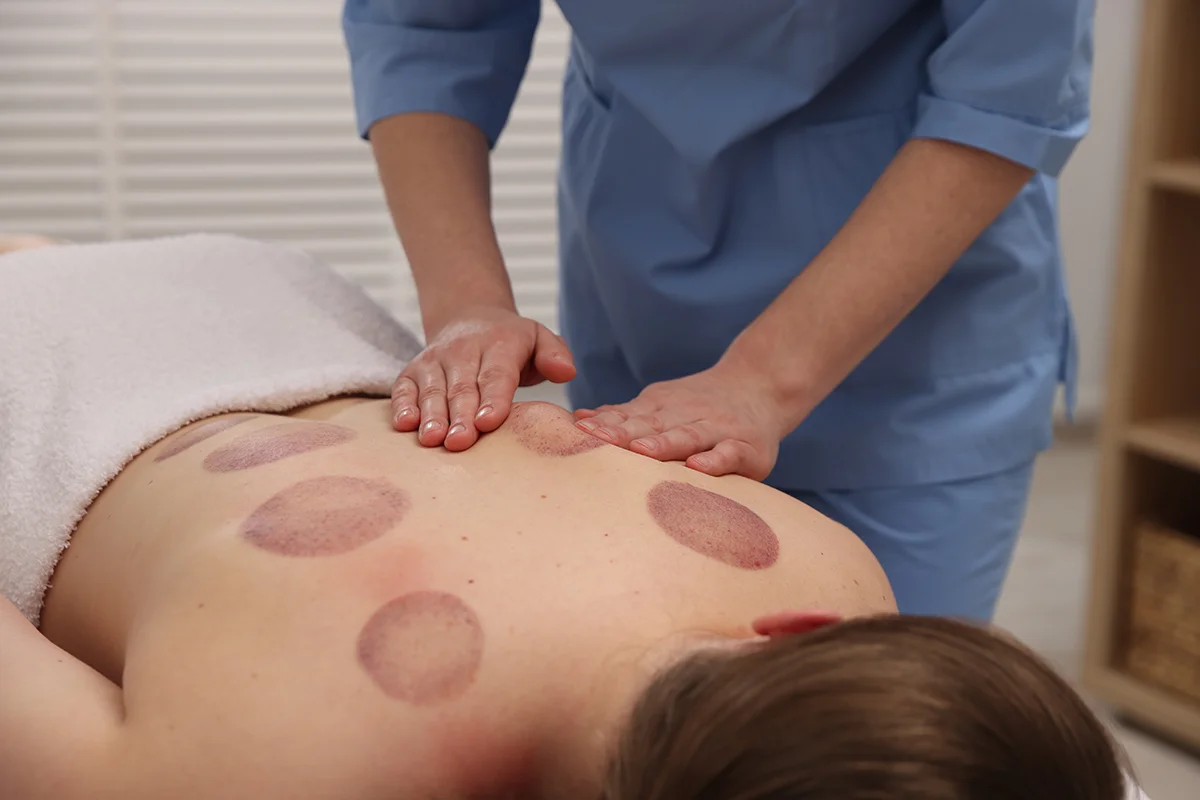
In a clinical setting we use a combination of myofascial cupping techniques, including static cupping and dynamic or moving cupping. Static cupping is where the cups are left on the skin for a period of time to relieve stubborn tension. Dynamic cupping, your therapist will glide them across the muscle after applying oil, combining the suction with a massage style technique. These approaches are most commonly used for sports and soft tissue therapy, and it sits comfortably within a modern musculoskeletal treatment plan.
Cupping has roots in traditional practice going back centuries, but the way we use it at Peacock is grounded in current physiotherapy and sports therapy principles. It is a tool to help reduce tension and discomfort in the short term, so you can move better and get more out of your active rehabilitation.
People often use the word “cupping” to mean one thing, but there are two quite different approaches – and the difference matters when you are choosing where to be treated.
Traditional cupping has its roots in ancient Chinese, Egyptian and Middle Eastern medicine, and is usually explained through the traditional framework of meridians, energy flow and releasing “stagnation” or toxins. It comes in two main forms – dry (or static) cupping, where suction alone is used and cups are left in place, sometimes created using a flame (fire cupping); and wet cupping, where a small incision is made in the skin before the cup is applied. We do not offer either of these traditional approaches.
Myofascial cupping is the contemporary clinical adaptation we use at Peacock Pain & Injury Clinic. It targets the fascia – the connective tissue network surrounding and connecting your muscles — and is applied with a clear understanding of your anatomy, movement patterns and soft tissue behaviour. Your therapist may glide the cups to work along a whole muscle group, or hold them over a specific area of restriction, depending on what your body needs.
The real difference isn’t just the technique — it’s the intent. Myofascial cupping is used to address specific areas of restriction, support injury recovery, improve range of movement, and complement your wider sports massage and soft tissue treatment. It’s not a wellness ritual — it’s a targeted soft tissue intervention, chosen and applied as part of your treatment and recovery plan.
If you’re not sure which approach is right for you, your therapist will talk you through it at your assessment.

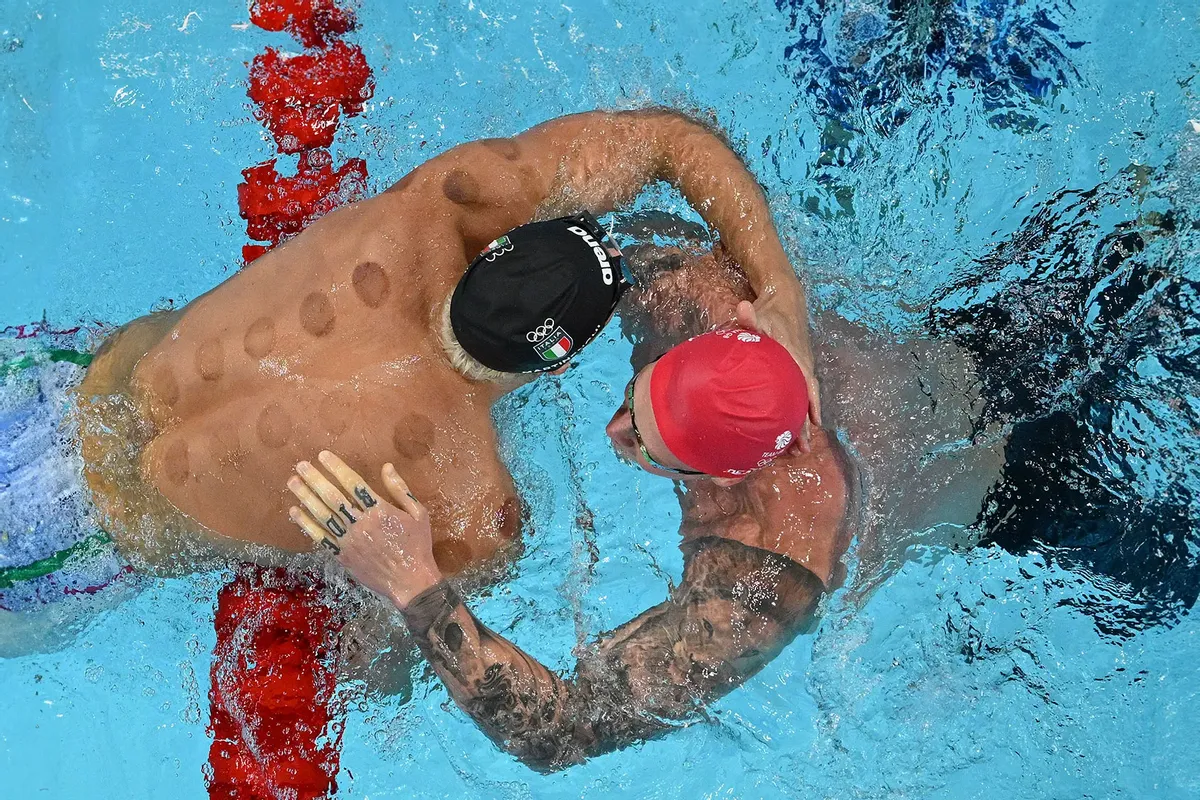
When the cup creates suction, the local blood vessels widen and circulation to the area increases, bringing more oxygen and nutrients to the tissue. Many people describe an immediate sense of release and reduced tightness in the treated area, along with improved comfort when they move afterwards.
It is worth being clear about one common myth. Cupping does not draw out toxins from the body, and the marks it leaves are not a sign of illness being removed. The current understanding is that cupping works mainly by increasing local blood flow, stimulating the tissue and the nervous system, and reducing the perception of muscular tension. We would rather give you an accurate explanation than repeat claims that the evidence does not support.
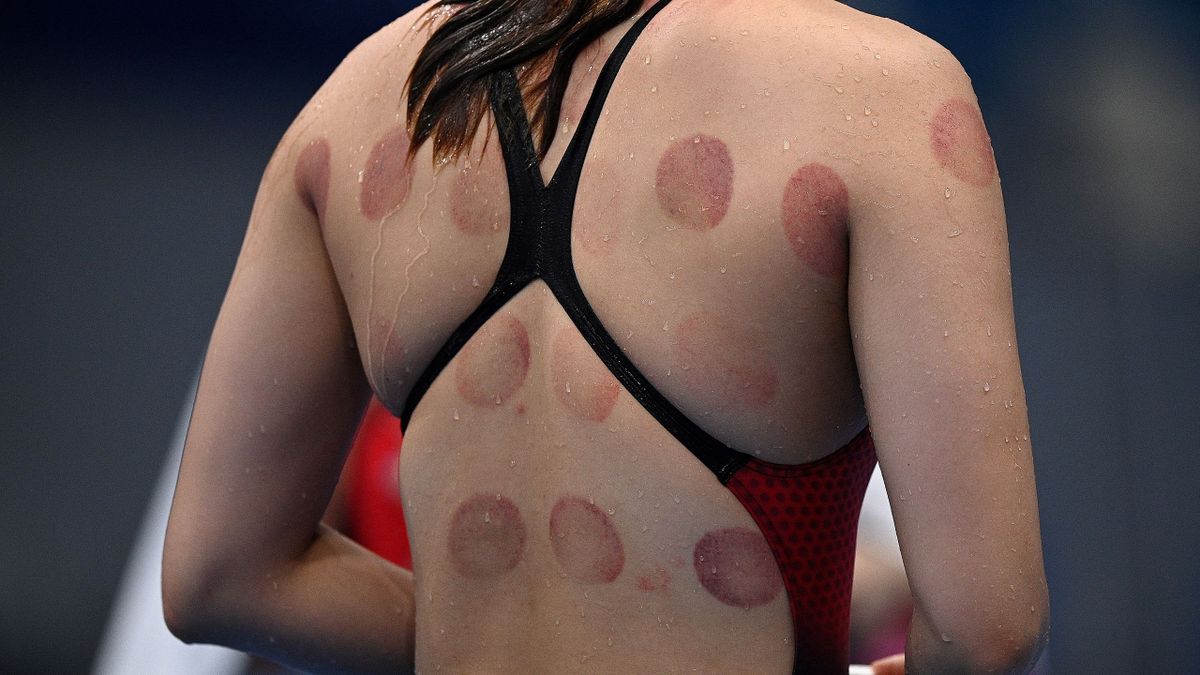
Cupping is generally well tolerated, and serious side effects are uncommon when it is delivered by a trained clinician. The most common effects are the temporary marks, mild tenderness, and occasionally a little lightheadedness.
Cupping may not be suitable, or may need to be adapted, if you:
The reason patients across Flintshire and North Wales choose Peacock is that we treat the underlying cause, not just the symptom in front of us. Cupping can be a valuable part of that, but it is one tool among many.
Depending on what your consultation reveals, your plan might combine cupping with sports massage, a structured exercise programme delivered through our patient app, hands on physiotherapy, or ongoing conditioning through our clinical Pilates and strength and mobility classes. The aim is always the same: to get you moving comfortably again and to keep the problem from returning.
Cupping at Peacock is delivered by qualified, registered clinicians, not by anyone without recognised training. Our soft tissue and sports therapy work is led by experienced practitioners. Our wider team includes a physiotherapist registered with the Health and Care Professions Council (HCPC), along with sports rehabilitation and massage specialists. You can meet the full clinical team here.
We have been caring for patients in Mold since 2019 and are rated 4.9 out of 5 from more than 87 verified Google reviews. That reputation is built on thorough assessment, honest advice, and treatment plans people can trust.
Our clinic is at Office 2, Bromfield Commercial Park, Stephen Gray Road, Mold, CH7 1HE, with free on site parking. We welcome patients from across Mold, Flintshire, and the wider North Wales area, including Wrexham, Flint, Buckley, Holywell, and Chester. You do not need a GP referral to book.
To check current session prices, see our pricing page.
Payment is taken after each session — we prefer card, but cash is also accepted. Want a receipt for your records? Just ask and we’ll send one straight to your inbox.
A quick note on insurance: we don’t invoice insurers directly, but your receipt will include your therapist’s registration details (HCPC, BASRaT, FHT, or equivalent) should you wish to claim through your own provider. Since every policy is different, it’s worth checking your cover with your insurer before you book.
Yes — many patients claim back physiotherapy, sports therapy, and sports massage through their health insurance. Policies vary from patient to patient, so please check with your insurer before booking that your policy covers your chosen therapist — it’s your responsibility to confirm this cover in advance.
Appointments are paid upfront on the day. We’ll give you a receipt showing your therapist’s registration number (HCPC, BASRaT, FHT, or other), which you submit to your insurer to claim back what your policy allows. As cover varies, we can’t guarantee reclaim amounts — any shortfall is your responsibility.
We know life doesn’t always stick to plan, and we’re happy to help you rearrange your appointment whenever you need to. The more notice you can give us, the better — with a minimum of 24 hours needed to avoid a charge.
We’ll send text and email reminders ahead of time to help you keep on track. To make a change, simply call or email us.

 Sara Jones
Trustindex verifies that the original source of the review is Google.
Excellent service with clear exercises to follow & I have made great progress in recovery over just 4 weeks JACQUIE WILLIAMSMatt is amazing. He sorted me out in two sessions for lower back pain. Very friendly and professional.
 Amy HillWorth every penny. Matt is very knowledgeable and patient. Takes the time to understand and make a plan that works with you and your needs moving forwards 10/10 👍
 Jess MGreat service every time. Matt is very knowledgeable and has helped myself and other members of my family with ongoing issues. Issy has been a great help too ☺️
 Graham MillerGreat service . Have helped me with my aches and pains , especially my knees. Clear , friendly, professional and a pleasure to deal with .
 Tom GambinoGreat service. Appointment offered quickly and really attentive to my needs.
 Helen WilliamsExcellent support and availability.Google rating score: 4.9 of 5, based on 114 reviews
We and our partners, including Google, use cookies and personal data to analyse traffic and for ads personalisation and measurement. You can accept, reject or choose which cookies to allow. Privacy Policy • Cookie Policy • Terms & Conditions • Google Privacy
We use cookies to help you navigate efficiently and perform certain functions. You can choose which categories to allow below. Cookies categorised as Necessary are always active.
We also use third-party cookies for analytics and advertising. These are only stored with your consent. You can update or withdraw consent at any time via the cookie icon at the bottom-left. This site operates under UK GDPR, the Data Protection Act 2018, and the Privacy and Electronic Communications Regulations (PECR). Cookie Policy • Privacy Policy
Necessary cookies are required for core site features including security, network management, and consent storage.
| Cookie | Duration | Description |
|---|---|---|
hmdg_cookie_consent | 180 days | Stores your cookie consent preferences. |
PHPSESSID | Session | WordPress session identifier. |
wordpress_logged_in_* | Session | WordPress login authentication. |
Functional cookies enable enhanced features such as live chat and remembering preferences.
| Cookie | Duration | Description |
|---|---|---|
wp-settings-* | 1 year | Stores user interface preferences. |
Analytics cookies help us understand visitor behaviour. Controls analytics_storage for Google Analytics 4.
| Cookie | Duration | Description |
|---|---|---|
_ga | 2 years | Google Analytics — distinguishes users. |
_ga_* | 2 years | Google Analytics 4 — session persistence. |
_gid | 24 hours | Google Analytics — distinguishes users. |
_gat | 1 minute | Google Analytics — throttles request rate. |
Performance cookies collect aggregate, anonymous data about site performance.
| Cookie | Duration | Description |
|---|---|---|
_gat_gtag_* | 1 minute | Google Tag Manager — rate throttle. |
Marketing cookies track visits to deliver relevant ads. Controls ad_storage, ad_user_data, and ad_personalization.
| Cookie | Duration | Description |
|---|---|---|
_gcl_au | 90 days | Google Ads — conversion tracking. |
_gcl_aw | 90 days | Google Ads — click attribution. |
_gac_* | 90 days | Google Ads — campaign information. |
IDE | 1 year | Google DoubleClick — ad targeting. |
Powered by HMDG • Cookie Policy