Peacock Pain & Injury Clinic

Sports Massage & Deep Tissue Massage in Mold, Flintshire

oiled calf massage in modern

Pain Relief, Recovery and Muscular Treatment That Actually Gets to the Root of It

If something in your body has been nagging at you for weeks – a tight neck, a lower back that won’t ease off, legs that feel heavy no matter how much you stretch – massage at Peacock isn’t just about getting some relief for an hour. It’s about understanding what’s going on and treating it properly.

Our therapists have a clinical background, not a spa one. That means every session is purposeful from start to finish – whether you’re coming in with post-training soreness, chronic muscular tension, a desk-job back that’s been building for years, or a body that’s recovering from injury or surgery.

We provide sports massage and deep tissue massage in Mold for patients across Flintshire and North Wales.

What Sports Massage Can Help With

People come to us with all kinds of muscular problems. Most of them have one thing in common, they’ve been living with the discomfort for longer than they should have.

Sports massage and deep tissue massage can be particularly effective for:

If you’re not sure whether massage is the right starting point or whether you need a full injury assessment, we can help you work that out too. Just give us a call.
man receiving massage therapy on his shoulder
athletes receiving massage therapy

Sports Massage vs Deep Tissue Massage — What’s the Difference?

We get asked this a lot. In practice, the difference is smaller than most people think – both work on the muscles and connective tissue, both use targeted manual pressure, and both can genuinely reduce pain and improve how your body moves. The distinction is more about context than technique.
Sports massage is structured around the physical demands of training and sport. It focuses on the muscles and movement patterns most stressed by your activity — improving flexibility, reducing post-exercise soreness, managing recurring tension that builds during training blocks, and supporting your body’s ability to recover and perform. You don’t need to be an athlete to benefit from it.

Deep tissue massage works through the deeper layers of muscle and connective tissue using sustained, firm pressure. It’s particularly effective for chronic tension that’s become so embedded it feels normal — the back that’s been stiff for months, the shoulder that never quite loosens. It can feel more intense than lighter massage, but your therapist will always work within your comfort level.

In most sessions at Peacock, we draw on both approaches based on what your body needs that day. We’re not rigidly one or the other – we’re clinically led.

Who Is Massage Therapy For?

Our patients come from all kinds of backgrounds. What they have in common is that something in their body isn’t quite right — and they want it sorted properly.

Runners and Endurance Athletes

Running loads the same muscles thousands of times per session. Tight calves, hamstrings and hip flexors aren’t inevitable – they’re manageable. Regular sports massage for runners helps reduce injury risk, support recovery, and keep you training consistently rather than having to manage setbacks.

Team Sport Players

Whether you play rugby, football, cricket or another sport, massage helps address the physical toll of the season. Pre-event sessions prepare the muscles for performance. Post-event sessions reduce soreness and accelerate recovery. Maintenance sessions keep chronic tightness from becoming a bigger problem mid-season.

Gym-Goers and Strength Athletes

High-volume resistance training creates a lot of muscular demand. Sports massage helps reduce DOMS, improve range of movement, and address the niggles that tend to build up when you’re training hard and regularly. It also works well alongside strength and movement testing if you want a fuller picture of how your body is coping with load.

People with Desk Jobs and Postural Pain

Sitting for long periods, driving, repetitive computer work – these create predictable patterns of tension in the neck, upper back, shoulders and lower back. Deep tissue massage addresses the chronic tightness that builds in these areas, often providing relief that stretching alone can’t quite get to.

People Recovering from Injury or Surgery

Massage plays a useful role in injury rehabilitation – helping to maintain tissue quality, reduce tightness in compensatory muscles, and support recovery alongside any physiotherapy or medical treatment you’re receiving. If you’ve been through surgery and want to include massage as part of your recovery, we’ll work in line with your surgical team’s guidance.

Why Peacock - And Why It’s Not Just a Massage

The difference between massage at a clinic like ours and a general massage service comes down to what happens before your hands-on treatment begins.

Our therapists take the time to understand your history, your activity level, and what’s actually going on in your body before working on it. That clinical approach shapes every decision made during your session — which areas to focus on, how much pressure to use, and what’s likely to give you the most lasting relief.

We also sit within a wider pain and injury clinic – which means if massage alone isn’t addressing the full picture, we can refer you internally to physiotherapy, sports injury assessment, or strength and movement testing without you having to start again somewhere else.

We’re based in Mold, Flintshire, and we see patients from across North Wales and the surrounding areas.
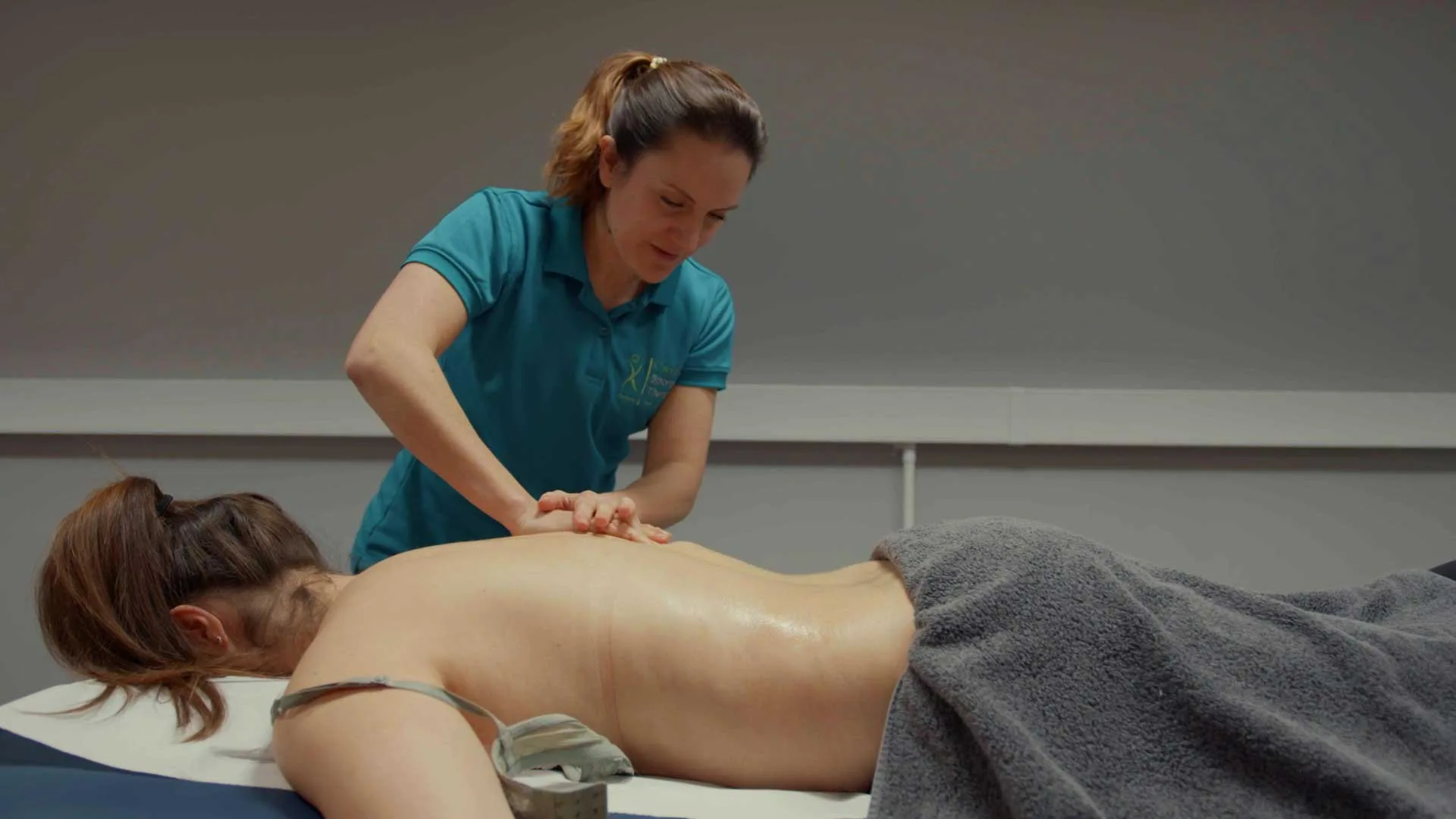
Isabel (Isy) is a Level 4 Sports Massage Therapist and a Physiotherapy Student. She is currently not a member of any professional bodies and will obtain her HCPC registration once she has completed her Physiotherapy qualification.
sports massage frame at 0m0s

Book a Sports Massage in Mold

If something’s been building and you’re ready to do something about it, booking is straightforward. Sessions run from 30 to 90 minutes depending on what you need.

Frequently Asked Questions

Not at all. Despite the name, sports massage is just as useful for people who don’t train. The techniques are effective for any kind of muscular tension, postural pain, or stiffness — regardless of whether it came from sport, a desk job, stress, or just how your body holds itself.
Sports massage and deep tissue massage can feel intense in areas holding a lot of tension — but it shouldn’t be painful in a way that feels wrong. Your therapist will check in throughout and adjust pressure based on your feedback. There’s sometimes some post-session soreness, similar to the feeling after a hard workout, which usually clears within 24–48 hours.
Yes, and it’s one of the most common reasons people book in. Sports and deep tissue massage can be very effective for muscular back pain, neck tightness, and tension headaches that have a muscular root. If there’s something more structural going on, we’ll tell you – and point you towards physiotherapy or sports injury assessment if that’s a better fit.
It depends on what you’re dealing with and what you’re asking your body to do. For acute tension or post-event recovery, three or four sessions can make a real difference. For chronic issues or high training loads, regular sessions every two to four weeks tend to be most effective. We’ll give you a realistic recommendation based on your specific situation.
Our therapists have a clinical understanding of the body and work within a pain and injury clinic. That means your session is informed by an assessment of what’s going on not just a treatment of wherever you point. If your issue needs more than massage, we’re well placed to identify that and refer you on appropriately.
No. You can book directly without a GP or consultant referral.
We’re based in Mold, Flintshire, and see patients from across North Wales – including Wrexham, Denbigh, Rhyl, Colwyn Bay and across the border into Chester.

Payment is taken after each session — we prefer card, but cash is also accepted. Want a receipt for your records? Just ask and we’ll send one straight to your inbox.

A quick note on insurance: we don’t invoice insurers directly, but your receipt will include your therapist’s registration details (HCPC, BASRaT, FHT, or equivalent) should you wish to claim through your own provider. Since every policy is different, it’s worth checking your cover with your insurer before you book.

Yes — many patients claim back physiotherapy, sports therapy, and sports massage through their health insurance. Policies vary from patient to patient, so please check with your insurer before booking that your policy covers your chosen therapist — it’s your responsibility to confirm this cover in advance.

Appointments are paid upfront on the day. We’ll give you a receipt showing your therapist’s registration number (HCPC, BASRaT, FHT, or other), which you submit to your insurer to claim back what your policy allows. As cover varies, we can’t guarantee reclaim amounts — any shortfall is your responsibility.

We know life doesn’t always stick to plan, and we’re happy to help you rearrange your appointment whenever you need to. The more notice you can give us, the better — with a minimum of 24 hours needed to avoid a charge.

We’ll send text and email reminders ahead of time to help you keep on track. To make a change, simply call or email us.